
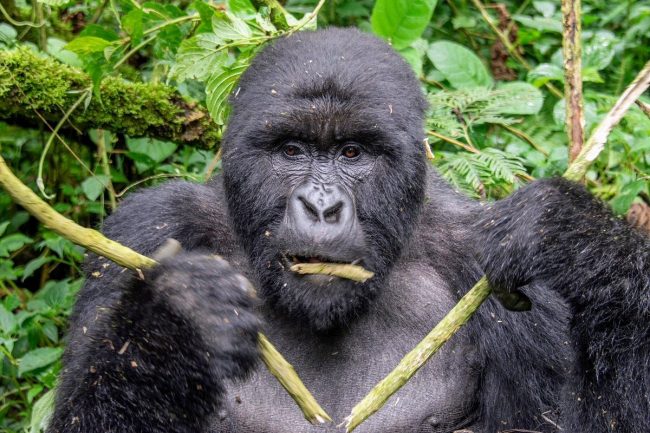
The minimum age for trekking gorillas in Rwanda is 15 years and above. This is among the set rules and regulations for gorilla trekking in Rwanda. The critical nature of mountain gorillas as an endangered species, as listed on the IUCN Red List. This makes them a priority for protection and conservation. This is why there are set rules and regulations by the governing body of the gorilla destination, the Rwanda Development Board, which each visitor must follow.
It is important to note that these are not just any rules. They are a lifeline for the protection and conservation of mountain gorillas for generations to come. However, these rules do not just protect the primates only but also protect you, the visitor. This is because the wilderness jungles of the gorilla destination may not be a favorite place for the unruly.
Discovering and encountering mountain gorillas in their natural habitat is the major tourist activity in Rwanda. And Rwanda, being among the gifted few to inhabit these endangered mountain gorillas, is an ideal destination. As many would wish to embark on this activity, it is very discriminatory, and only those above the required age limit are permitted. This set age limit, however, has for so long been reprobated because it leaves out some physically able youngsters from having a chance to encounter the mountain gorillas.
Why is 15 the age limit for gorilla trekking in Rwanda?
With many concerns about the age limit for gorilla trekking in Rwanda, we have decided to address these concerns as follows.
Lack of patience and maturity childern under 15 years
Gorilla trekking requires maturity to follow the set rules and regulations of this activity and also adhere to the required code of conduct. Children below the age of 15 years lack the patience and maturity to take these rules and regulations seriously. The playful nature of children may not allow them to focus when in the gorilla habitat.
Childern undern 15 years pay less attention
Children are also fond of having attention deficit and may not pay attention to the rangers as they recite the rules. Kids below 15 years are also easily stimulated and may wander in the forest and get lost in the dense jungle while following like a bird or monkey.
Lack of awareness and stamina
Children below 15 years old lack the necessary awareness and stamina. The terrain in the gorilla destination can be very steep and hard to navigate, even for adults, and this could be worse for children. Awareness, in this case, is when to move or stay, even when you are not told anything. Gorillas are unpredictable and have limitless movements; thus, they can even come close to a visitor. In such a scenario, kids below 15 years old may be frightened and run away, which may stress the primates. Some may poke the gorillas jokingly in their playful nature to see what would happen, and this can be catastrophic.
Lack emotional intelligence
Emotional intelligence is an important feature in any adult person, and this may be lacking in children. This emotional intelligence is very much needed during a gorilla trekking experience in Rwanda. Children below the required age of 15 years old don’t handle stressful situations well and usually choose flight or run away if scared, and in some cases, they scream and cry.
Unpredictable nature of gorillas
Gorillas are unpredictable and can charge at you at unexpected moments. This is where a visitor must remain calm and lower themselves to appear small and avoid eye contact with the gorilla. However, children would take off in fear, triggering the gorilla for a chase.
Difficult terrain
Mountain gorillas live in the challenging conditions of dense vegetation cover and steep, rugged terrain. Such conditions require incredible physical fitness and endurance to have a gorilla trekking experience. These conditions can be very hard for an adult seasoned hiker, now what about a child below 15 years? Therefore, navigating the dense gorilla jungles under steep terrain is no child’s play or a walk in the park, but a strenuous encounter.
What are some of the other rules and regulations of gorilla trekking in Rwanda?
The age limit rule is a drop in the ocean of the many set rules and regulations that determine a proper gorilla trekking experience in Rwanda. Here are some of the highlighted rules and regulations.
- Maintain a distance of 7 meters from the gorillas
- Wear a face mask when in the presence of the gorillas
- Trekking is strictly an hour
- Do not smoke, eat, or drink in front of the gorillas
- Avoid imitating the gorilla’s sounds and behaviours
- Always walk in a single file
- Do not surround the gorillas
- Do not touch the gorillas even when they are close to you
- Always maintain silence while trekking the gorillas
- Avoid flash photography, etc.
Where is gorilla trekking done in Rwanda?
Gorilla trekking in Rwanda is done in Volcanoes National Park. This incredible gorilla destination is located in the northern region of the country in Musanze District. It is the second most popular gorilla destination after Uganda’s Bwindi Impenetrable National Park. It hosts about 300 mountain gorillas with over 13 habituated gorilla families. Volcanoes National Park was established in 1925 and is one of the oldest protected areas in Africa.
It once hosted the famous primatologist, Dian Fossey, who became an icon in the conservation and protection of mountain gorillas. Volcanoes National Park forms an extension of the Virunga massif by hosting 5 of the 8 volcanic mountains of the Virunga massif. This park covers an area of about 160 square kilometers and is characterized by lush bamboo forests.
How much is a gorilla permit in Rwanda?
A gorilla permit in Rwanda costs USD 1,500 for foreign non-residents, USD 500 for foreign residents and visitors from the rest of Africa, and USD 200 for citizens. This gorilla permit is issued by the Rwanda Development Board through a tour company like Monteero Safaris.
The money collected from the sale of the gorilla permits goes to the conservation efforts and protection programs of the gorillas and their habitat. A small percentage goes to the development of the communities around the gorilla destination through building schools and health centers. This is a way of giving back to the community through sustainable and responsible tourism.