
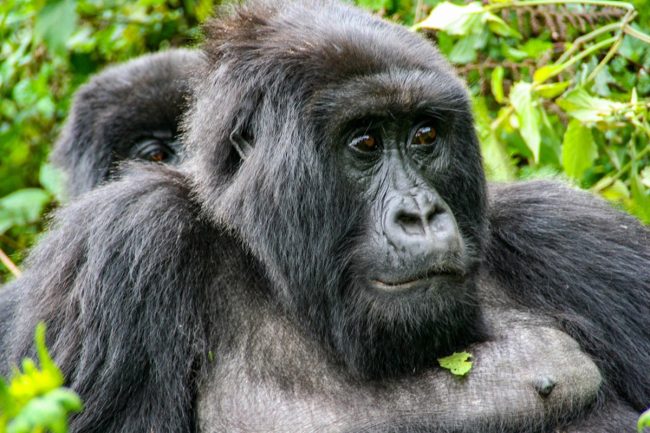
Bwindi Impenetrable National Park is the only gorilla destination in the world that offers both gorilla trekking and gorilla habituation experiences. These uniquely incredible adventures highlight Bwindi as a one-stop center for mountain gorilla encounters and exploration.
Briefly about Bwindi Impenetrable National Park
Bwindi Impenetrable National Park is located in the southwestern region of Uganda. It is close to the borders with Rwanda and the Democratic Republic of Congo. It was established in 1991 as a national park, a few years after the discovery of mountain gorillas. This followed years of constant elevations from two crown forests to a forest reserve, animal sanctuary, and later a national park.
This park lies in the Virunga Conservation Area, which is known as the last mountain gorilla habitat. This conservation area stretches all the way from the Virunga National Park in the Democratic Republic of Congo, passing through Rwanda’s Volcanoes National Park. It connects to Uganda’s Mgahinga Gorilla National Park and then to Bwindi.
This national park of Bwindi is equalled by none but rivalled by many. This is because it is the best and most popular gorilla destination in the region and the world at large. The park harbors over 459 mountain gorillas, equaling over half of the total population of mountain gorillas. 50 gorilla families run this park, with only 24 families habituated and ready to be trekked.
Comparing gorilla trekking and habituation in Bwindi
Comparing these two adventures of gorilla trekking and gorilla habituation is best done by visiting and embarking on these activities in Bwindi. The park spans over 331 square kilometers and is divided into four sectors or regions. These regions are called gorilla sectors and are distributed across the different compass directions of the park.
From the north lies the Buhoma gorilla sector, which is the most developed and the pioneer of all other sectors. Nkuringo and Rushaga gorilla sectors dominate the southern region with epic scenic views of the Virunga ranges in Congo. These sectors also have steep terrains that add adventure to the gorilla experience. Ruhija gorilla sector in the east is a sleeping giant of a sector awaiting discovery and offers untamed primate encounters.
Bwindi Impenetrable National Park sets the stage for gorilla trekking and gorilla habituation adventures. All the mentioned gorilla sectors of Bwindi offer gorilla trekking adventures. However, only the Rushaga gorilla sector offers a gorilla habituation experience. It is such facts that rank this park the best since it gives a complete package of adventure. Understanding the distinctive differences of gorilla trekking and habituation, it’s best to first describe them each. This will help to unpack what these two adventure experiences entail and how different they are.
Gorilla trekking
Gorilla trekking is the most common tourist activity done by most visitors who come to Bwindi Impenetrable National Park. This adventure experience involves manoeuvring the dense canopies of steep terrain inside the impenetrable forest of Bwindi, searching for the mountain gorillas, are then spending an hour in their presence.
The hour the visitors spend with the mountain gorillas is priceless. Visitors are faced with a glimpse into the livelihood of these primates. They can watch the primates as they prepare their day’s chores. This includes feeding, resting, playing, and the females grooming their young.
This trekking experience of mountain gorillas is not a simple task, as visitors can move a great distance as they look for these primates. This is because these primates are mobile and move across the park in search of food and a new habitat. This, therefore, forces them deep into the park. Thus, visitors can walk for hours in the deep canopies to find these mountain gorillas. Gorilla trekking is undoubtedly the best experience for visitors who love adventure and nature. The trekking experience also opens the park for more discoveries and encounters, like birds and smaller primates.
Gorilla habituation
The process of gently customizing or familiarizing human presence to the semi-habituated or wild mountain gorillas for four hours is called gorilla habituation. This adventure of gorilla habituation is unique only to Bwindi Impenetrable National Park and to the Rushaga gorilla sector, to be specific.
This is because of a lot of factors, from the number of mountain gorillas and the expenses involved in habituating these primates. Gorilla habituation is done by researchers, scientists, and rangers whose main aim is to protect the primates and the visitors as they embark on this experience.
Gorilla habituation is a complex tourist activity that lasts between 2-3 years until the gorilla family is fully habituated to humans. This time of habituating these mountain gorillas depends on many factors, with the main one being the behavior of the silverback. The silverback is the leader and dominant male in a gorilla family. This means all the other members follow the orders and behaviors of the silverback. Thus, if the silverback is easily customized to humans, then the rest of the family will quickly follow.
Differences between gorilla trekking and gorilla habituation
Gorilla trekking and habituation are two faces of the same coin, as they offer relatively similar adventure experiences. Below is a around up of the differences between these experiences that set them apart.
Duration
The distinctive difference between these two gorilla experiences lies in the duration with the primates. Gorilla trekking offers an hour in the presence of the mountain gorillas after encountering them in their natural habitat. Gorilla habituation, on the other hand, offers up to 4 hours with these primates upon encounter.
Permit costs
The costs for each gorilla experience are different from the other since these adventures are conducted differently. These permit costs range by region and nationality of the visitors and are priced along the same vice. A gorilla trekking permit costs USD 800 for foreign non-residents, USD 700 for foreign residents, and UGX 300,000 for East African citizens. Gorilla habituation is, however, slightly higher with foreign non-residents paying USD 1,500, residents USD 1,000, and then the East Africans and Uganda in general, UGX 750,000.
Number of visitors
Each gorilla experience between trekking and habituation requires a specific number of visitors to embark on. A maximum of 8 people are allowed to embark on a gorilla trekking experience, and this is in relation to each gorilla family being trekked by 8 people daily. For gorilla habituation, this number drops to only 4 visitors allowed for a habituation experience.
Destination
Gorilla trekking is a common adventure experience in Bwindi Impenetrable National Park that is done in all the gorilla sectors in this park. This is not the case with gorilla habituation, as it is only done in the Rushaga gorilla sector. This is on account of many factors, such as the number of unhabituated gorilla families and also the size of the destination.
Target gorilla group
The target gorilla group is also another distinctive factor that differentiates these two gorilla experiences of trekking and habituation. Gorilla trekking targets habituated gorilla families that are already accustomed to humans, while gorilla habituation targets semi-habituated gorilla families.