
Walking into an untamed exploration experience in the land of a thousand hills, Rwanda is a gateway to unraveling adventures. This adventure experience calls for an ultimate experience that combines gorilla trekking and wildlife safari in Rwanda.
Kicking off the undisputed adventure is unveiling the hidden treasures of this great land. Rwanda is a well-known nation for harboring the endangered mountain gorilla primates. In most cases, this hides the fact that this country is not limited to mountain gorillas only, but also other wildlife species.
These species rule the country’s savannah wilderness with utmost roars and dominating force. Therefore, the best way to enjoy the ultimate adventures and fully explore Rwanda as a safari destination is by combining gorilla trekking and a wildlife safari.
Gorilla trekking in Rwanda
Among the gorilla destinations in the world, Rwanda has come up as a force to reckon with for undisputed primate encounters. The country’s artistry in coordinating a standard mountain gorilla experience puts it among the very best. To truly appreciate the greatness of this country, it is beneficial to understand in detail what gorilla trekking entails.
Gorilla trekking is a tourist activity that enables visitors to access the endangered mountain gorillas in their natural habitat and spend an hour in their presence. Though it may seem like a short time to spend with these gentle giants, the experience measures up to that. These gorillas dwell in the mountainous region of Rwanda, tucked away in the deep montane canopies, awaiting discovery. They are considered endangered since only a few of these primates are left in the world today.
What makes Rwanda part of the very few gifted destinations that harbor these mountain gorillas. This is because it falls in the Virunga Conservation Area. This conservation area is considered the last remaining mountain gorilla habitat in the world. This is why these mountain gorillas are precious and their habitats are highly conserved and preserved.
The Virunga Conservation Area sets its mapping from the Virunga National Park in the Democratic Republic of Congo. It crosses the borders into Uganda’s Bwindi Impenetrable National Park and Mgahinga Gorilla National Park. This area then stretches into Rwanda, covering its northern area of Volcanoes National Park. The Virunga Conservation Area maps out the remaining mountain gorilla destinations in the world. And from this, you can learn that Rwanda has a huge impact as a gorilla destination.
Volcanoes National Park
Contemplating gorilla trekking in Rwanda does not go by without a mention of Volcanoes National Park. This is simply because this national park is the only park in the country that harbors the endangered mountain gorillas. This park is located in the northern region of the country. It borders Uganda and the Democratic Republic of Congo.
It stretches for about 160 square kilometers in the district of Musanze. Volcanoes National Park dates back in history by dominating the charts on the continent as the oldest park. This is because it was the first park to be established in 1925.
Mountain gorillas have a similar DNA to that of humans, and that’s why they possess similar social characteristics. They live in groups called gorilla families headed by a dominant male gorilla called a silverback. Volcanoes National Park has over 12 gorilla families that are habituated and ready to be trekked daily. The mountainous nature of the park makes it an ideal option for harboring these primates. Volcanoes National Park has over 5 of the 8 volcanoes of the Virunga massif.
Cost involved in gorilla trekking in Rwanda
The costs involved in gorilla trekking in Rwanda are mainly charged on the gorilla permit. A gorilla trekking permit is a document that grants or gives visitors access to encounter the gorillas in their home. These permits are categorized into different groups, each with specific costs, such as foreign non-resident permits costing USD 1,500, foreign residents at USD 500, and Rwandans at USD 200.
Gorilla trekking in Rwanda is not an easy or cheap experience, as it involves costs to take part in this experience. These costs are available to help in maintaining the gorilla destination by paying workers and also sustainability work, like developing the communities around the park. These costs also fund the different projects of conservation and preservation of the gorillas and their natural habitat.
Wildlife safari in Rwanda
Rwanda’s main wildlife center is in its only savannah park, which offers an amazing experience. A wildlife safari in Rwanda emphasizes the encounter with the safari wildlife species that live in the savannah wilderness. Akagera National Park, being the only savannah destination in the country, makes it the main character in this wildlife game. The park’s vast nature makes it a perfect candidate for wildlife encounters during this safari in Rwanda. It lies on the eastern border with Tanzania, covering over 1,122 square kilometers.
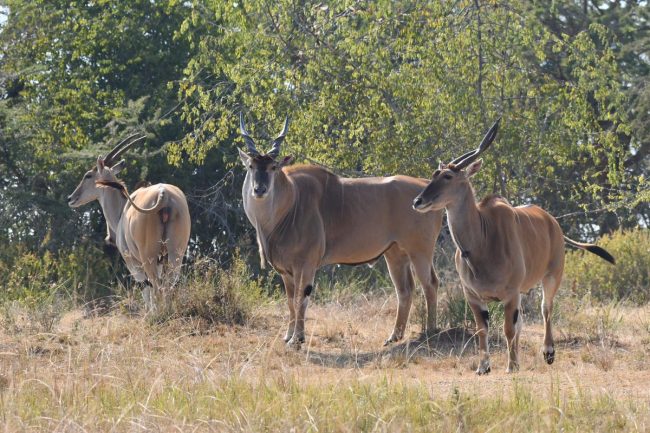
This massive land area ranks it as the biggest national park in the country. The park harbors a wide range of incredible wildlife species, but the stands are Big Five animals are lions, elephants, rhinos, buffaloes, and leopards. These animals are the dominant attractions in the park and account for most of the visits. Akagera National Park also has other wildlife species, such as zebras, hyenas, warthogs, antelopes, giraffes, topis, and waterbucks, to mention but a few.
Akagera National Park was named after the famous River Kagera that flows on the park borders, flowing into Lake Ihema, the biggest lake in the park. This feature adds a touch of adventure to the park as it harbors the aquatic life of the park, with hippos and crocodiles are the main inhabitants.
The natural biodiversity of Akagera National Park is not limited to only the land or aquatic species, but also the aerial species. Approximately 480 bird species also dominate the skies in this park. They are scattered across its ecological system, from the savannah grassland plains and woodland to the swamps and riverine areas. Some of these species include the African fish eagle, palm nut vulture, cattle egret, red-faced barbet, Robin cat, papyrus gonolek, saddle-billed stork, and African grey hornbill, among others.
The best time to have a combined gorilla trekking and wildlife safari in Rwanda
With conditions notwithstanding, the dry season is the best time to have a combined gorilla trekking and wildlife safari in Rwanda. This season is received twice in Rwanda since the country has an equatorial climate. This season is a period of prolonged dry conditions fostered by the reception of little or no rainfall.
This dry season presents favorable conditions for this combined safari. Since gorilla trekking is a hands-on activity that requires navigating the steep terrains and dense canopies, the dry season helps to keep the place dry and navigable for the visitors. For the wildlife safaris, dry conditions make the wildlife species in the savannah easy to spot due to sparse vegetation, aiding visibility and also allowing the species to reach the remaining watering holes. The dry season is experienced twice a year, from June to September and December to February.
However, it is also worth noting that this combined adventure in Rwanda can also be done in the wet season. This is because this season presents distinct experiences from the dry season, which can be adventurous for nature lovers. The wet season comes with prolonged rainfall patterns that keep the parks freshly green with lush vegetation, giving incredible scenic beauty. The trekking trails are often soaked and offer a challenge for the trekkers, adding to the adventure. This period is experienced from March to May and from October to November.