
Taking a Uganda safari during the dry season is a substantially superior experience any traveler can ever dream of. Uganda, the undisputed ‘Pearl of Africa’, is endowed with unique tourist destinations and activities. These cater to all types of travelers wishing to explore the country during the dry months of the year.
The dry season is ideal for people travelling to Uganda to have memorable safari experiences. This is seamless to weather challenges like rainfall and muddy roads that are typical of wet seasons. Uganda is situated in the tropics, hence experiences two dry seasons annually. One runs from December to February and the other from June to August.
During the dry season, the sky is quite clear thus ensuring visibility in the key Uganda safari destinations. The average temperatures range between 23-27oC causing warm conditions that are considered perfect for outdoor tour activities. The tourist destinations where visitors can experience safaris include the following:
- Queen Elizabeth National Park
- Murchison Falls National Park
- Kidepo Valley National Park
- Lake Mburo National Park
- Semuliki National Park
- Kibale National Park
- Pian Upe Wildlife Reserve
- Jinja City
- Mount Rwenzori National Park
- Mount Elgon National Park
- Semuliki Wildlife Reserve
- Bwindi Impenetrable National Park
- Mgahinga Gorilla National Park, etc.
Activities for the dry season
Gorilla trekking
During the dry season, visitors on Uganda safaris can embark on a gorilla trekking experience. This can be done in the exquisite beauty of either Bwindi Impenetrable National Park or Mgahinga Gorilla National Park. Gorilla trekking tours offer visitors unrivaled opportunities to hike through the dense Afromontane vegetation of either national park to find and spend an hour with the renowned gentle giants.
Bwindi in particular offers visitors an unforgettable 4 hours in the presence of the gorillas during gorilla habituation. With over 460 individual mountain gorillas, Uganda has more than half of the remaining mountain gorillas on earth. Therefore, visitors can take as many flawless pictures of the primates as possible to remind themselves of Uganda’s diverse natural marvels and wildlife species.
Game drives
In the dry season, visitors on Uganda safaris get unparalleled opportunities to explore the country’s abundant wildlife species with over 345 mammal species including the African Big Five. Game drives are 2-3-hour pleasant guided tour experiences in Uganda’s game parks and wildlife reserves. During game drives, visitors move on comfortable safari vehicles via specific park tracks to observe numerous wildlife species and take amazing photos of them with the vast savannahs as backdrops.
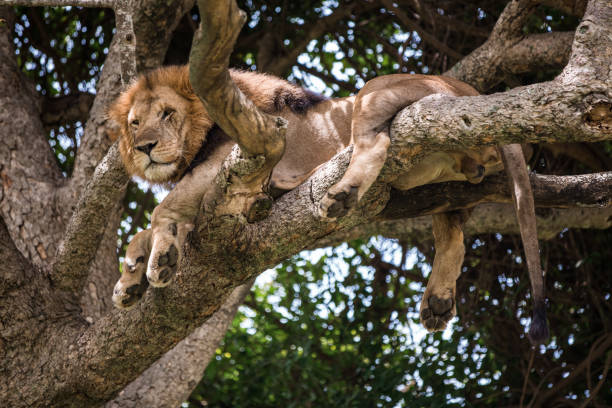
Guided game drives are best enjoyed in Murchison Falls National Park, Queen Elizabeth National Park, Lake Mburo National Park, Kidepo Valley National Park, and Semuliki National Park among others. Wildlife species to spot include tree-climbing lions, elephants, buffaloes, leopards, cheetahs, waterbucks, bushbucks, Uganda kobs, and others.
Chimpanzee trekking
During the dry season in Uganda, visitors on safaris will encounter and spend an hour with chimpanzees in any of the chimp destinations. These include Kibale National Park, Budongo Forest Reserve, and Kyambura Gorge in Queen Elizabeth National Park among others. Uganda has over 5,000 chimpanzees and some of them can be seen during a breathtaking chimpanzee trekking adventure. This activity is experienced by tracking a habituated chimpanzee group in any of the mentioned luxurious rainforests. Visitors also have a unique option of spending a full day with a chimpanzee group during a chimp habituation experience in Kibale National Park.
Cultural Encounters
Cultural tours are another impressive activity a visitor can do in Uganda during the dry season. With an unquestionably superior cultural legacy that includes at least 40 tribes and tens of languages, Uganda is a dream destination for visitors on cultural tours. Visitors have perfect opportunities to physically interact with people from diverse backgrounds, practicing distinct cultures and traditions including rituals, dance, drama, folklore, and others.
Some of the most notable people to encounter include the Batwa Pygmies, Karimojong, Baganda, Banyankole, and Bakiiga among others. Key tour sites include the adjacent communities around Bwindi Impenetrable National Park, Mgahinga Gorilla National Park, Kidepo Valley National Park, Kibale National Park, and Kabaka’s Palace.
Boat Cruise
Dry seasons are also perfect periods for visitors on Uganda safaris to enjoy the exciting boat cruises. These activities are experienced on water bodies, either inside or outside the national parks. A visitor on this tour enjoys a leisurely journey while on a boat in Lake Mburo, Kazinga Channel, and the Victoria Nile among others. Visitors can enjoy beautiful sights of birds and other wildlife species such as crocodiles, hippos, and elephants. The duration is usually 2 hours and sometimes sport fishing and swimming are additional activities.
Birdwatching
Though birdwatching is at its peak during the wet season, the dry season also offers marvelous views of these colorful creatures. Uganda has at least 1,000 recorded bird species that can be viewed in various hotspots. These include Mabamba wetland, Mabira Forest, Budongo Forest, Bigodi Wetland, Bwindi Forest, Queen Elizabeth National Park, Murchison Falls National Park, and Semuliki National Park among other destinations. Uganda has some of the rarest bird species, including some Albertine endemics. These include the Ruwenzori batis, Ruwenzori apalis, and African fish eagle. Others include shoebill stock and grey crowned crane.
Other tourist activities can be enjoyed in Uganda during the dry season. These include nature walks, hiking tours on Mount Rwenzori, Mount Elgon, and Mgahinga Gorilla National Park, biking, and plenty more.
What to pack for a Uganda safari in the dry season
- Lightweight clothes to ensure comfort while exploring in the warm weather conditions. The clothing should also comprise long-sleeved shirts and trousers to prevent insect bites and direct sunlight on your gentle skin.
- Hiking boots, for walking on uneven Ugandan terrain including hills, valleys, rocky ground, and thick bushes among others.
- Cold weather clothing that includes a warm sweater, head sock, and hand gloves among others to keep you warm during relatively low-temperature conditions.
- Raincoat or jacket to remain dry during wet conditions.
- Insect repellent to protect you against bites from various insects, including mosquitoes. This avoids the spread of deadly diseases such as malaria and dengue fever among others.
- Personal documentation and requisite tour permit to ensure that you are a genuine traveler. These documents include visa, passport and gorilla, golden monkey or chimpanzee permits depending on your destination.
- Toiletries including hand sanitizers, antibacterial soaps, toilet papers, toothpaste, facial cleaners and others.
- Small backpack that is big enough to accommodate a variety of portable essentials such as a basic first aid kit, torch, binoculars, refillable water bottle, snacks, camera, and extra batteries among others.