
Overview
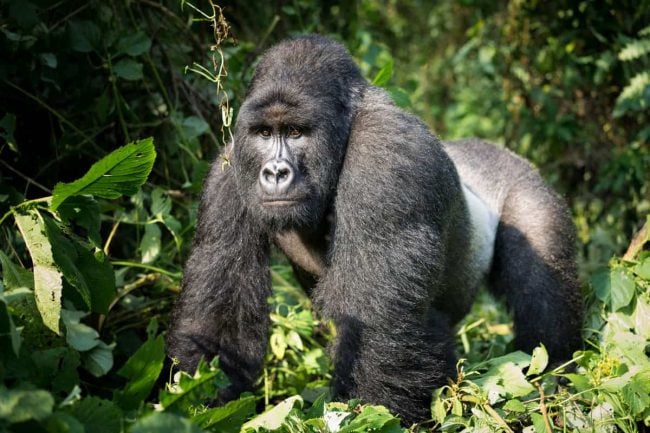
Uganda, Rwanda, and the Democratic Republic of Congo are renowned for their gorilla trekking experiences. They provide visitors with a once-in-a-lifetime wildlife experience to observe mountain gorillas in their natural habitat. Experts consider it one of the most profound wildlife encounters on Earth. Bwindi Impenetrable National Park is home to more than half of the remaining mountain gorillas with Mgahinga Gorilla National Park, Volcanoes National Park, and Virunga National Park trailing behind. UNESCO listed all these parks as World Heritage Sites because of their ecological importance. They became popular with the world because they host mountain gorillas that were declared endangered and at risk of extinction.
Mount Rwenzori, also known as the “Mountains of the Moon,” is one of the most challenging and rewarding mountain treks in Africa. The highest point on Rwenzori is Margherita Peak on Mount Stanley at 5,109 meters above sea level. This has made Mountain Rwenzori the third-highest peak in Africa behind Mount Kilimanjaro and Mount Kenya. Located along the border of Uganda and the Democratic Republic of Congo, this UNESCO World Heritage Site offers adventurers an unparalleled journey. It offers diverse ecosystems, unique alpine landscapes, and breathtaking scenery. Rwenzori stands out among African mountains for its snow-capped peaks and glaciers. It also hosts rare plant life and rich biodiversity. Hence, making it an adventure for serious trekkers.
The different ecosystems from lowland tropical rainforests to high-altitude glaciers the Rwenzori supports a unique mix of animal species, many of which are endemic to the area. The area has about 70 mammals including elephants, leopards, duikers, otters, colobus monkeys, L’hoest’s monkeys, blue monkeys, chimpanzees, and rock hyrax. Birds with 19 endemics like Rwenzori turaco, Shelley’s crimsonwing, honeyguide, double-collared sunbirds, strange weaver, black-eared ground thrush, and strange weaver. There are also reptiles and amphibians like the three-horned chameleon, leopard geckos, frogs, toads, clawed frogs, insects, butterflies, and many more.
Gorilla trekking
On the day of the day of gorilla trekking, you will be briefed at park headquarters about the rules and regulations to follow. Guides do this to ensure the safety of both the magnificent gentle giants and the tourists. Treks start early in the morning, and guides divide participants into small groups of eight based on their fitness level and preference. The hike to find the gorilla families can take about 1-8 hours depending on the location of the gorillas. The trek passes through dense forests, with guides and porters assisting along the way. Once you find the gorilla family, you can observe them up close for one hour. You’ll witness their social interactions, feeding, grooming, and sometimes even playful behavior.
Away from the stars of the shows which are the mountain gorillas, the parks are rich in other wildlife. These include monkeys, chimpanzees, baboons, pottos, elephants, giant forest hogs, galagos, bush pigs, jackals, golden cats, golden monkeys, serval cats, duikers, buffaloes and many more. The endemics birds including green broadbills, black bee-eater, regal sunbird, bar-tailed trogon, black-billed turaco, Rwenzori batis, turaco, kingfisher, strange weaver, dusky twinspot, mountain oriole, mountain yellow warbler, purple-breasted sunbird, blue-headed sunbird and many more with butterflies and rodents.
Whether in Uganda, Rwanda, or the DRC, gorilla trekking offers a unique and transformative wildlife experience. Standing a few meters away from these gentle giants in the wild is both humbling and awe-inspiring. For anyone with a love of nature and wildlife, this is an unforgettable adventure that helps protect one of the world’s most endangered species.
Mount Rwenzori hike
With trails like the central circuit which is the most popular taking 6-9 days, as Kilembe, Mahoma, Bukurungu, and others. The Rwenzori hike is often considered more demanding than other African mountains. This is due to its rugged terrain, frequent rainfall, and challenging ascent through the diverse climatic zones. Reaching the summit involves rock scrambling, ice climbing, and glacier walking, making it a more technical climb compared to Kilimanjaro. The Rwenzori range receives a lot of rain, and the trails are often muddy and slippery, especially in the lower elevations. A full ascent to Margherita Peak takes around 7 to 10 days, depending on the chosen route and weather conditions. Shorter hikes that do not reach the summit can last 3-5 days. All treks require experienced local guides and porters to help navigate the difficult terrain and carry gear. Their expertise is essential for a successful and safe trek.
The Rwenzori hike is unique due to its diverse ecosystems Hikers pass through tropical rainforests, bamboo forests, heath zones, and alpine zones, eventually reaching the glacier-covered summit. Professional guides and porters must accompany hikers. The rugged terrain and unpredictable weather make expert help invaluable for safety.
The best time for both is during the dry seasons, from June to August and December to February. However you can hike Mount Rwenzori year-round. Combining both trekking and hiking offers an unparalleled adventure. They includes wildlife encounters, scenic mountain landscapes, and cultural experiences in one of Africa’s most biodiverse regions.