
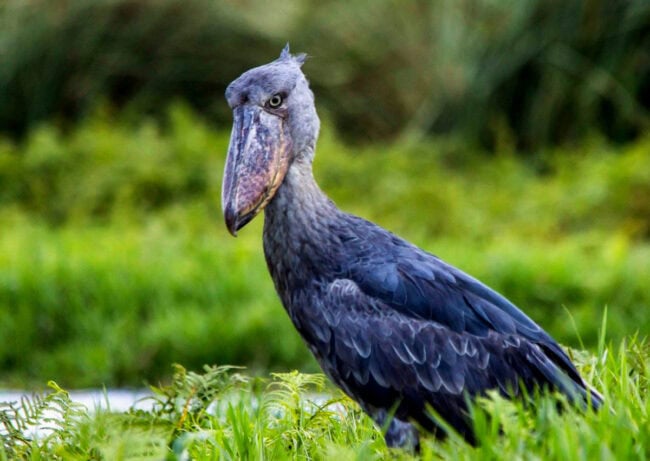
Mabamba wetland has come to be popular for viewing a shoebill stork. Luckily, this is the most sought-after bird species by avid birders around the world. Lake Victoria surrounds Mabamba, which lies northwest of Entebbe. This vegetation is crucial in preserving aquatic wildlife in this area. It’s therefore classified as an Important Birding Area and Ramsar site.
Mabamba wetland hosts more than 300 bird species. Visitors can view about 7 bird species of Lake Victoria’s biome-restricted bird species. Mabamba hosts some bird species that are threatened in other areas. The papyrus gonolek is also a popular bird species here.
They are visible in their hundreds at this site. Palearctic bird species are in large numbers, especially from March up to October. Tourists may then wonder how people conduct birding around the wetland. Motorized boats sail visitors through the swampy vegetation to the best viewing places for birds.
Tracking the shoebill stork in Mabamba Wetland.
Shoebill storks are the most sought-after bird species in Mabamba Wetland. Its uniqueness, both physically and in its peculiar looks, is one of the center attractions for it. It’s not common in many places in Uganda or the African continent. This puts Uganda in a better stand on attracting avid birders.
The lungfish, also known as “mamba” in the local Luganda language, is the main food for the shoebills. Lungfish is in large quantities here, a factor that keeps these birds around the area throughout the year. They can be viewed annually. Shoebills stand in competition, however, with local fishermen who equally depend on this type of fish. Nonetheless, the Shoebill Stock is still in large quantities.
However, people have long associated shoebills in the area with superstition. There had been, for generations, a superstition among fishermen around this wetland. For example, if a fisherman saw a shoebill while fishing, they would have a poor fish catch.
This superstition is a bit true since the shoebill hunts the fish; they would hide before fishermen came. Fishermen targeted the shoebills and chased them away. This put them at risk
Many birds were killed as a consequence, which drastically led to a decrease in their numbers. The result of this was to gazette Mabamba wetland as a Ramsar site in 2006. This ensured that people protect and conserve the shoebill. Since then, stakeholders have formalized birding tours, raising awareness and educating the community. This gradually phased out the superstition that people previously held.
Local fishermen have also been able to make money from birding tours. This is through renting out their boats for sailing visitors across the wetland. Concerned authorities have also been supportive in educating them about resident bird species. Hence, creating employment for fishermen as possible navigators and guides.
These teachings have led fishermen to protect the shoebills rather than hunt them down like they used to do. While viewing the shoebill, tourists are advised not to get too close to them, as that may scare them off. Shoebill storks are best viewed during the morning hours.
The area at such time is generally calm, and this is important because shoebills at this point are usually fishing for their lunch. Guides advise visitors not to get too close to scare away the shoebill. Visitors can best view shoebill storks in the morning.
Other activities at Mabamba wetland other than birding.
- Sport fishing.
- Butterfly watching.
- Interaction with fishermen.
- Cultural expeditions.
How to get to Mabamba wetland?
Locating Mabamba isn’t a hard task altogether, since it’s close to Uganda’s main gateway, Entebbe International Airport. From Entebbe, visitors can easily drive to Nakiwogo landing site situated northwest of Entebbe. This route is the shortest. They later board a boat, which takes about 10 minutes to get across Lake Victoria and stop at Kasanje landing site. While approaching Mabamba wetland, visitors go through an open field. Many gardens provide habitat to different bird species.