
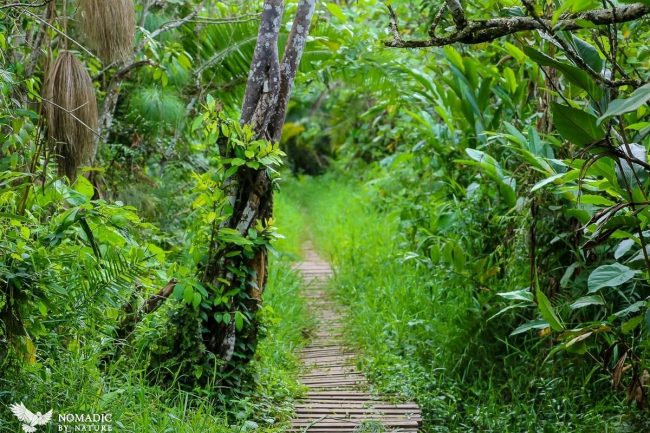
Situated in the shadow of Mountain Rwenzori, also known as the Mountains of the Moon, Bigodi Wetland Sanctuary is a large natural sanctuary located at the edge of Kibale Forest National Park. Bigodi Wetland Sanctuary is a community-managed conservation project. This sanctuary is under a registered local association called Kibale Association for Rural and Environmental Development (KAFRED). An exploration of the Bigodi Wetland Sanctuary is often combined with a chimpanzee trekking experience in Kibale National Park.
This is because this sanctuary is situated about 6 kilometers south of the Kibale Forest National Park headquarters of Kanyanchu. The sanctuary’s proximity to the park is the very reason why it is the best option to explore after a chimpanzee trekking experience. Exploration of the Bigodi Wetland Sanctuary also encompasses the community cultural tours. Such tours offer a unique experience to visitors to enjoy an incredible cultural experience and interaction with the locals.
This sanctuary is located about 40 kilometers from the major tourism city of Fort Portal. In such proximity, visitors can also travel from Fort Portal city and explore the Bigodi Wetland Sanctuary. This sanctuary derives its name from the local word in the Rutooro language called “Kugodya.” This word means to walk sluggishly, because people struggled to walk through the swamp, and after coming out, were exhausted and struggled to walk.
Bigodi Wetland Sanctuary was established to protect the large Magombe swamp. This swamp is a major lifeline for several species located in this wetland. Magombe, as the name suggests, has a dark history where some people were swallowed by this swamp during the building of the bridges across the wetland. Magombe means graveyard in the local Rutooro dialect, and this is how this swamp came to have its name. Visitors have a lot to experience while at this adventurous sight.
What to see and do while in Bigodi Wetland Sanctuary?
Bigodi Wetland Sanctuary is undoubtedly the best conservation and sustainability project in the world, earning it recognition by the UNESCO World Heritage and Sustainable Tourism Programme. Bigodi is also part of the Man and the Biosphere (MAB) Programme, which promotes ecosystems like wetlands through research and community involvement. Below are some of the attractions and activities preserved at Bigodi.
Bird watching
The apex of attractions in Bigodi is the numerous bird species harboured in this sanctuary. Being a wetland, there is plenty of food for the birds and water, therefore, high birding activity. There are designated trails or tracks for birding that help in easing navigation and lead straight to some of the nesting areas in this sanctuary. Two categories of bird species are present in Bigodi, the migratory birds, which are seasonal, and the endemic birds, which are the resident birds of Bigodi. The common birds to spot while on a birding experience include the great blue turaco, papyrus gonolek, white-winged warbler, and the shining blue kingfisher, among others.
Primate species
Bigodi is one of the richly diverse sanctuaries in Uganda, host a variety of primate species, totalling over 8 primate species. During a walk in the sanctuary, visitors have a chance of encountering some of these primates. Visitors can encounter primates like the red colobus monkeys, red-tailed monkeys, L’Hoest’s monkeys, vervet monkeys, black and white colobus monkeys, blue monkeys, olive baboons, and grey-cheeked mangabey, among others.
Guided nature walks
For guided nature walks, I think there is no better place than Bigodi Wetland Sanctuary. Because this place is just imaginary, plenty to see and encounter. Every step opens a door of exploration from the vast flora species to the whistling birds above, and the chanting primates. As you burn some calories through this work, you are cheered on by the many species around the sanctuary. This is no ordinary walk, surely a walk to remember.
Community and cultural tours
Outside the sanctuary, visitors can also have an encounter with the community members and have splendid cultural tours. During this experience, visitors are taken through the local ways of making coffee with some melodies to go with the aroma. Visitors can enjoy a cup of coffee with some bites, like ground nuts, to go well with the strong, fresh coffee. This production of coffee involves stages of drying, roasting, and finally pounding.
From the coffee experience, visitors are also ushered into the community with some cultural songs and dances. This is done by the community women under the weaving initiative, who collect funds to support their livelihood. This is one way of sustainable and responsible tourism, which can be termed as giving back to the community.
What is the best time to visit Bigodi Wetland Sanctuary?
All year round, this wetland sanctuary is open and can be visited without any restrictions. However, the dry season offers ideal conditions to explore this wetland since this season is characterized by little or no rainfall with high temperatures. These particular conditions tend to impact heavily on the vegetation in this wetland, thus making it sparse. This increases visibility of the different primate species and birds.
The walking trails and boardwalks are dry and not slippery. This eases navigation and increases the chances of spotting more species of birds and primates. Such conditions also reduce the risk of slipping and causing injuries.
The wet season does not necessarily mean that it will rain throughout; no, it can rain but also shine for a while. Therefore, it is best to say the weather is very unpredictable, and it is essential to be prepared for all conditions. It is also good to explore Bigodi Sanctuary in the wet season, since it is the best season for birding.
This sanctuary sees an increase in the bird species during the wet season. This is because of the coming of the seasonal migratory birds that fly in for breeding. This season presents heightened birding activities and is a good season to explore the sanctuary for birders.