
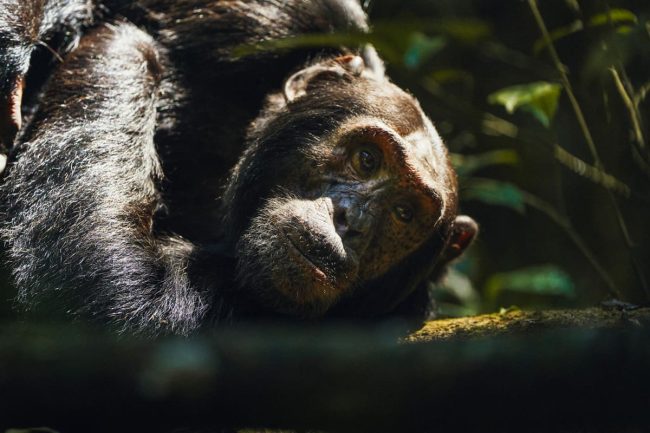
The Ngogo chimpanzee community is the most famous and popular in all the chimpanzee destinations in the country. This chimpanzee community is located in the Ngogo chimpanzee sector in the heart of Kibale Forest National Park. This sector harbors one of the largest concentrations of chimpanzee primates not just in the country but also in the region.
The Ngogo chimpanzee community hosts over 200 chimpanzees, the most for any chimpanzee community in the country. This community, however, split into two factions, the western and central factions, from 2015 to 2018. These two factions recently fell into an intense chimpanzee civil war, where the western faction attacked the central faction. This community remains the most studied community due to its adventurous behaviours.
This chimpanzee community was first explored in 1995 by a batch of international researchers, David Watts from Yale University and John Mitani from the University of Michigan. They were partnering with Jeremiah Lwanga and PhD students from Makerere University. This exploration was under the research program that was named the Ngogo Chimpanzee Project. It is under this project that most of the chimpanzees in this community were habituated for daily tracking. This research was mainly aimed at studying the behaviours of the chimps, their social networks in family, mating rights, grooming, and the collection of samples like their urine and stool or faeces.
The Ngogo community has also featured in most documentaries and films that tell a story of the territorial battles in the hidden jungles. The most popular documentary is the Netflix Chimp Empire, which was released on 19th April 2026. The Rise of the Warrior Apes is another documentary that was filmed in Kibale National Park about the chimpanzees of the Ngogo community.
The Ngogo Chimpanzee Project
What started as a monitoring and habituation program that focused on the study of wild chimpanzees in their natural habitats quickly led to the founding of the Ngogo Chimpanzee Project. It was started in 1995, as mentioned earlier by David and John, to protect the natural habitats of these chimpanzees and their well-being. However, the research on this chimpanzee community dates back to 1975.
This research was conducted to study and protect the forest homes of primates like colobus monkeys, red-tailed monkeys, and mangabeys, among others. This research was led by an American zoologist under the New York Zoological Society, called Thomas Struhsaker. He established the Ngogo Research Area inside the vast Kibale National Park.
It is this research area that later birthed the Ngogo Chimpanzee Project, which was joined by David Watts and John Mitani. Since then, this project has been taken over by the Ugandan government through the Makerere University Biological Field Station. The project now trains Ugandan zoology students and other experts interested in primates and research. The project is still monitored and evaluated by its founders, Thomas Struhsaker, David Watt, and John Mitani.
Chimpanzee trekking in the Ngogo community
Chimpanzee trekking is the adventurous act of encountering wild chimpanzees on foot in their natural environments for an hour. The Ngogo chimpanzee community serves as the best place/sector to have this incredible experience. Trekking focuses on the habituated chimpanzees and the Ngogo community having most of the habituated chimpanzees in the forest; it is the ideal community to explore.
Chimpanzee trekking begins with a pre-trekking briefing session done at the park briefing center at Kanyanchu Visitors’ Center. This briefing highlights the dos and don’ts of chimpanzee trekking. These can also be classified as the rules and regulations, and they include some of the following.
- Always wear a mask before going trekking
- Do not eat or drink in front of the chimpanzees
- Do not imitate their vocalizations
- Maintain a distance of at least 8 meters from the chimpanzees
- No flash photography
- Do not litter in the forest, etc.
Visitors are then grouped in groups of 6 people and allocated to a chimpanzee community, in this case, Ngogo. A guide ranger and an armed ranger both join you on this adventure to uncover the secrets of the forest through the eyes of the chimpanzees. The armed ranger is there to protect the group, since the forest has other wildlife like forest elephants, which can be dangerous to the visitors. In rare cases of encountering forest elephants, the ranger fires to scare them off.
After locating the chimpanzee community, the visitors are given an hour to spend in the presence of the chimpanzees. Visitors can take as many pictures and record videos in accordance with the rules and regulations as recited at the pre-trekking briefing.
The best time to visit the Ngogo chimpanzee community
The dry season qualifies as the best time to trek the chimpanzees of the Ngogo community. However, Kibale National Park is always open for exploration year-round. The dry season, considered the peak season, runs from June to September and from December to February. The park’s location close to the equator guarantees it receives two wet and dry seasons in a calendar year.
Trekking chimpanzees of the Ngogo community in the wet season is also ok. The wet season, considered the low season, takes place from March to May and October to November. This is a time when the park receives heavy rains that lead to dense vegetation and muddy trails. This increases the challenge of encountering these chimpanzees. However, the weather in Uganda is unpredictable, and sometimes it may not rain as much as expected, thus creating an ideal atmosphere to spot these chimps. It is also worth mentioning that the low season comes with discounted chimpanzee trekking permits and subsidized accommodation rates.
All in all, contact us at Monteero Safaris to organize a tour for you to explore the famous Ngogo chimpanzee community in the uncharted jungles of Kibale National Park.