
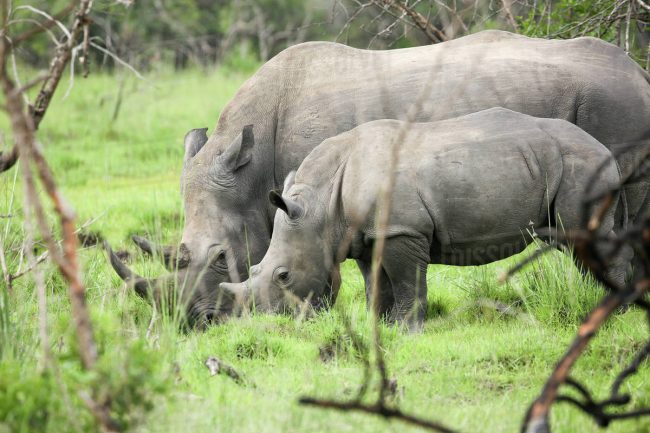
What started as a simple lifetime dream to reintroduce rhinos to Kidepo Valley National Park was recently realized. The auspicious day of 17th March 2026 saw the first phase of the reintroduction of southern white rhinos to Kidepo. The Uganda Wildlife Authority, with its mandate to protect and conserve the wildlife in Uganda, decided to relocate rhinos back to Kidepo.
In a move that can only be termed prehistoric, two of the planned eight southern white rhinos were relocated to Kidepo from the Ziwa Rhino Sanctuary. In over 43 years, Kidepo Valley National Park has not had any sight of rhinos. However, Kidepo was known for its fruitful population of rhinos. It was the only park that had all the Big Five animals in unison.
However, this wasn’t until 1983 when the last rhino was discovered lying lifeless in the Narus Valley in Kidepo. This discovery marked the dark reality of the extinction of rhinos in the entire country. The rhino’s unique defense mechanism of having a huge horn on its face was the major reason for its extinction in the country.
Much as rhinos are massive and rarely have predators, the humans who are meant to protect them are their most dangerous nemesis. The 1970s and 80s were dangerous times to be a rhino in the northern parts of Uganda. Fuelled by consistent civil wars and political instability at that time, the northern region was a battleground for wars. This paved the way for the opportunistic poachers who took advantage of the situation to wipe out the rhinos and sell their horns on the black market.
UWA relocates rhinos to Kidepo Valley National Park is a headline that reads across the world as a sign of hope. Hope for the once barren land to bear fruit again, hope for the once overlooked destination to become a modest savannah of the Big Five. This relocation follows a 10-year program by the government to populate the national parks.
What are the measures put in place to protect the rhinos in Kidepo?
It is a big shift from Ziwa Rhino Sanctuary to Kidepo Valley National Park for the rhinos, and thus, they need increased protection for them to live freely in the wild. Below are some of the adopted measures to protect the rhinos in Kidepo.
Ground wildlife rangers
In addition to the wildlife rangers in Kidepo Valley National Park, more rangers have been recruited to increase and offer maximum protection to the rhinos. Rhinos possess a more valuable horn, which makes them a target for poachers. The ground rangers ensure that there is constant ground monitoring to flush away any possible poachers and their dangerous traps.
Constant monitoring with technology
The areas of the park where the rhinos have been relocated have been fenced off with electric wires and sensors to detect any intrusions. This helps to identify the possible intrusion and quickly locate the exact place and handle it decisively. There is also technology in place to detect the movements of the rhinos and to monitor their movements consistently.
Partnering with neighbouring communities for protection
Conservation and protection of the rhinos is not possible without the interest of the community. This is because the threat of poachers begins right from the communities neighbouring the park. Therefore, the government, through the Uganda Wildlife Authority, has sensitized locals on the benefits of the rhinos to the community and how they can participate in protecting them.
Set up of a laboratory in the park.
The threat to the rhinos’ existence is not only from poaching but also to their health. The government has set up a laboratory in the park to carry out tests and samples to monitor the health of the rhinos. Before the relocation process, part of the park was disinfected from tsetse flies, as they can cause diseases in animals. This veterinary lab is vital in diagnosing and treating any illnesses that the rhinos may develop while in Kidepo.
What are the benefits of having rhinos return to Kidepo?
Rhinos became an important addition to the wildlife in Kidepo Valley National Park. This has come with a lot of benefits, as identified below.
Boosting tourism
The relocation and reintroduction of rhinos to Kidepo has boosted the tourism of this park. Kidepo, as an isolated park relatively visited, has seen an increased number of visitors. This boost in tourism is definitely attributed to the rhinos, as the park is now a complete Big Five destination.
Creation of jobs
As tourism increases in this region following the relocation of rhinos, more opportunities are created. There has been an increased program of recruiting rangers, especially from communities around Kidepo. This creates jobs for the people, and this increases the income generation for the locals.
Increased revenue collection
As a result of the increased tourist numbers to Kidepo due to the reintroduction of the rhinos, the government has seen an increase in revenue collection. This increase in revenue will boost the development of infrastructure in this area, such as roads, schools, hospitals, and many others.
Community development
As locals get employment for the increased tourism opportunities due to the return of rhinos, household incomes increase, and thus community development. Same to this the increased collection of revenue from the booming tourism in this park; there is emphasis on infrastructure development through road construction and schools, among others. This, in turn, boosts the community development.
What to see in Kidepo Valley National Park?
Kidepo Valley National Park is a vital destination in the pearl of Africa, offering unique and adventurous attractions. Some of the things to see in this park include the following.
Big Five
With the addition of rhinos in Kidepo Valley National Park, the Big Five experience has been completed. Kidepo, like some other destinations like Queen Elizabeth and Murchison Falls, had initially been missing only the rhinos to complete the Big Five. Kidepo now boasts as the only park with all the Big Five species, i.e., lions, leopards, rhinos, elephants, and buffaloes.
Bird species
Kidepo Valley National Park is a vast territory of over 475 bird species. From endless valleys of savannah and scattered woodlands to swamps and riverine vegetation, the park offers different ecosystems for birds. The ostrich is the biggest bird on Earth, and Kidepo is privileged to have it, and it is only here in Kidepo. Other birds like the shoebill, secretary bird, Abyssinian ground hornbill, and the Karamoja apalis, among others, can also be spotted in Kidepo.
Narus Valley
The Narus Valley provides a unique platform for the best wildlife screen in real time. This valley attracts thousands of grazers due to its green pastures and a constant water source. With grazers as prey, the predators have to be in the picture. The valley becomes a hunting ground for various wildlife predators like lions, leopards, hyenas, and cheetahs. The cheetahs are rarely sighted, but the Narus Valley presents a unique opportunity to spot them.